Workshop Practice & Conservation

Returning character to old metal

An automobile can be restored many times, but it is original only once. When you peel back a loose corner of horsehair upholstery or inspect chalk assembly numbers written on a firewall in 1958, the goal shifts from making an old machine look brand new to keeping its documented biography legible.

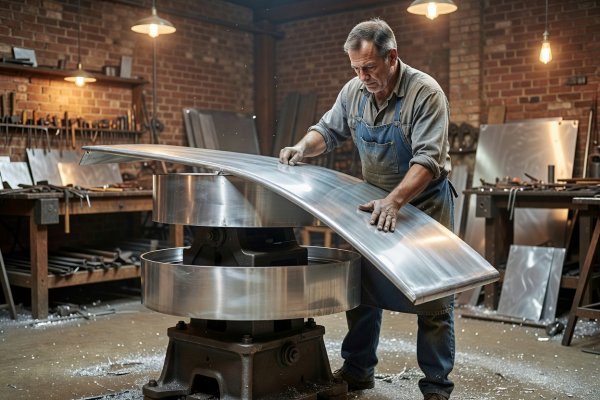
Craftsman guiding a curved aluminum front wing panel through a cast-iron English wheel in a warm-lit workshop Sheet Metal Craft
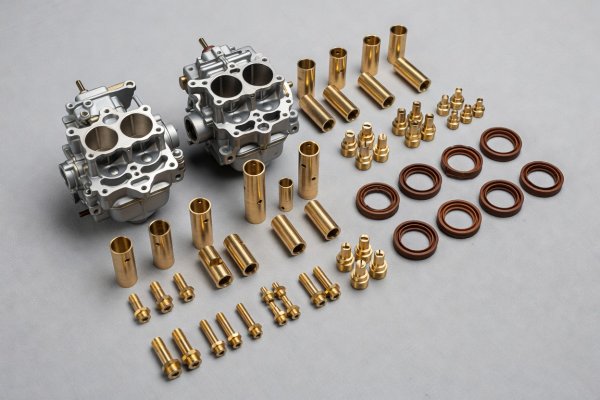
Disassembled Weber 40 DCOE twin-choke carburetor bodies, brass emulsion tubes, and leather accelerator pump seals on a clean bench cloth Fuel & Ignition

The Charter of Turin and the shift toward preservation

During the 1980s and 1990s, concours restorations often went further than the original factory ever intended: chassis frames that left Coventry or Modena in semi-gloss brush-applied black enamel were powder-coated to a mirror sheen, and spot-welded sills were filled smooth until every factory join vanished. In 2012, the Fédération Internationale des Véhicules Anciens (FIVA) ratified the Charter of Turin, establishing international guidelines that treat historic vehicles as cultural artifacts on par with historic architecture or maritime vessels.

Under the Charter, a distinction is drawn between preservation (stabilizing existing finishes and components), conservation (arresting active decay such as rust or dry-rotted hydraulic seals while keeping original materials), and restoration (replacing missing or structurally failed parts using period-appropriate processes). Today, major gatherings from Villa d’Este to Pebble Beach feature dedicated Preservation Classes where craze-lined cellulose paint and mellowed Connolly Vaumol leather are prized over fresh resprays.

Gas welding, wheeling machines, and panel annealing

When corrosion or accident damage demands new metal on a classic aluminum body, modern TIG welding is not always the ideal choice. Period Italian and British panel beaters joined 99%-pure 1050 or 3003 series aluminum sheets using an oxy-acetylene torch and flux. Because gas welding heats a slightly wider zone along the butt joint, the weld bead remains malleable enough to be hammered and wheeled completely flat on an English wheel (ruota inglese) without cracking—eliminating the need for thick plastic filler on the outside of the panel.

Working aluminum by hand over a leather shot-bag hardens the grain structure. Restorers periodically rub household soap across the aluminum skin and play a soft acetylene flame over the surface until the soap turns black—the exact visual temperature cue (around 350°C to 400°C) indicating the alloy has relaxed and returned to its soft, annealed state.

Step 1: Chassis provenance audit and metallurgical inspection

Before turning a single wrench, photograph every stamped number, casting date code, hose clamp style (such as period Cheney, Jubilee, or Romablok bands), and routing clip. Endoscope cameras inserted into box-section sills and tubular spaceframes reveal internal scale rust without cutting inspection holes into healthy outer skins.

Step 2: Babbitt white-metal bearings vs. modern shell conversions

Many pre-1940 engines from Bugatti, Bentley, and Alfa Romeo used poured Babbitt (tin-antimony-copper white metal) bearings cast directly onto the connecting rods and hand-scraped with Prussian blue engineers’ dye. While modern thin-wall Vandervell shell conversions simplify future rebuilds, properly poured and line-bored Babbitt bearings easily withstand normal road and historic rally use when paired with clean filtration and low-detergent mineral oil.

Step 3: Lucas, Bosch, and Magneti Marelli electrical integrity

Many mysterious “vapor lock” or hot-restarting complaints blamed on carburetors are actually failing condensers or weakened Alnico magnets inside vintage Lucas or Magneti Marelli distributors and magnetos. Rebuilding the advance weights, remagnetizing the rotor on a bench charger, and wrapping new PVC-insulated cables inside braided cotton looms restores period look with total road dependability.

Step 4: Nitrocellulose lacquer vs. two-pack polyurethane finishes

Modern basecoat-clearcoat urethane paints look wet and plastic-deep on a 1930s or 1950s sports car. Single-stage acrylic urethane mixed with a 10% to 15% matting agent—or traditional nitrocellulose lacquer where regulations permit—replicates the softer, warmer optical refraction of hand-rubbed period coachwork.