1912: Ernest Henry and the birth of the modern twin-cam cylinder head
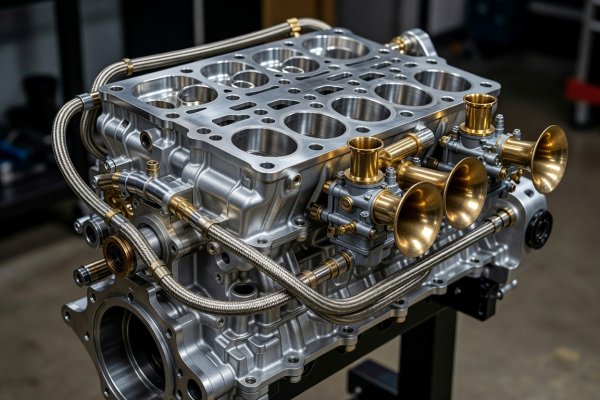
Before World War I, Grand Prix engines relied on massive displacement—often 12 to 15 liters—turning lazily below 1,800 rpm with side valves or exposed pushrods. In 1912, Swiss engineer Ernest Henry worked with drivers Georges Boillot, Jules Goux, and Paolo Zuccarelli (known collectively at Peugeot as Les Charlatans) to create the Peugeot L76.
Henry’s layout combined dual overhead camshafts (DOHC), four inclined valves per cylinder arranged in a pent-roof combustion chamber, and a centrally placed spark plug. Because the intake charge flowed directly across the top of the cylinder into the exhaust port without reversing direction, volumetric efficiency soared. By 1913, a 5.6-liter evolution of this architecture was spinning reliably past 2,800 rpm and establishing the blueprint for virtually every high-efficiency internal combustion engine built a century later.
Conquering brake fade at the end of Mulsanne
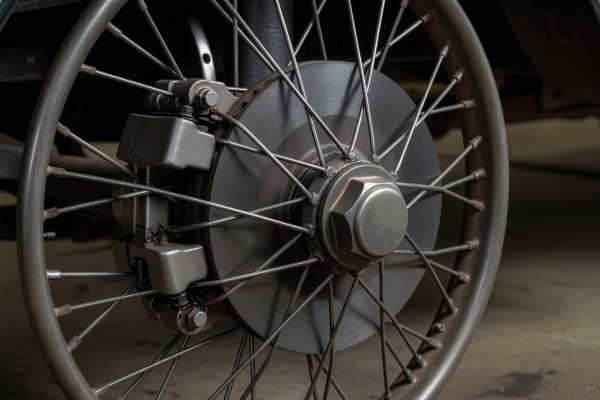
Even as engines grew more potent through the late 1940s, stopping power remained tied to finned aluminum or cast-iron drum brakes. When a heavy sports racer braked repeatedly from 150 mph, the iron drum Liner expanded outward from heat—moving away from the internal friction shoes until the brake pedal sank toward the floorboard.
Norman Dewis and Jaguar’s engineering boss William Heynes collaborated with Dunlop’s aviation division, which had developed hydraulic caliper disc brakes to stop heavy jet aircraft on short runways. Because an exposed steel disc expands slightly toward the friction pads when hot and sheds heat directly into the airstream, fade vanished. Fitted to the factory Jaguar C-Types at the 24 Hours of Le Mans in June 1953, the Dunlop disc brakes allowed Tony Rolt and Duncan Hamilton to brake dozens of yards deeper into Mulsanne Corner than drum-braked rivals, securing the first Le Mans victory at an average speed above 100 mph (105.85 mph).
Mechanical direct fuel injection and the spaceframe tube
Two years later, Mercedes-Benz brought aviation fuel technology to the road with the 1954 300 SL “Gullwing” (W198). Drawing on experience with the wartime Daimler-Benz DB 601 inverted V12 aircraft engine, engineers replaced carburetors on the 3.0-liter M198 inline-six with a six-plunger Bosch high-pressure mechanical pump that sprayed atomized fuel directly into the cylinder wall ports.
To keep the car light while using standard W186 saloon running gear, chief engineer Rudolf Uhlenhaut designed a multi-tubular steel spaceframe weighing just 82 kilograms. Because the triangulated side trusses rose high along the cabin flanks to resist bending loads, conventional doors were impossible—necessitating the upward-hinging roof doors that became the model’s signature.